Share on
ASEAN’s Next Growth Pole: Investing in Cambodia’s Coastal Provinces
Publish Date:


The Cambodia coastal corridor is emerging as one of Southeast Asia’s important economic gateways and a national economic growth pole, contributing to the achievement of the Royal Government of Cambodia’s Vision 2030 and Vision 2050.
Cambodia continued to demonstrate strong investment momentum during the first half of 2026, with a total of 276 investment projects registered by the Council for the Development of Cambodia (CDC) and the Provincial-Municipal Investment Sub-Committees (PMISCs), representing approximately USD 4.7 billion in registered investment capital and the potential creation of around 160,000 jobs nationwide. Of the total, 181 projects were registered by the CDC, with combined registered investment capital of approximately USD 4.4 billion and the potential to create more than 120,000 jobs, including 105 projects located outside Special Economic Zones (SEZs), seven projects involving the establishment of new SEZs, and 69 projects located within existing SEZs. The approved investments reflect Cambodia’s continued economic diversification beyond traditional garment manufacturing into higher-value sectors, including automotive assembly, electric vehicles, agro-processing, renewable energy, tourism, industrial infrastructure, and advanced manufacturing.
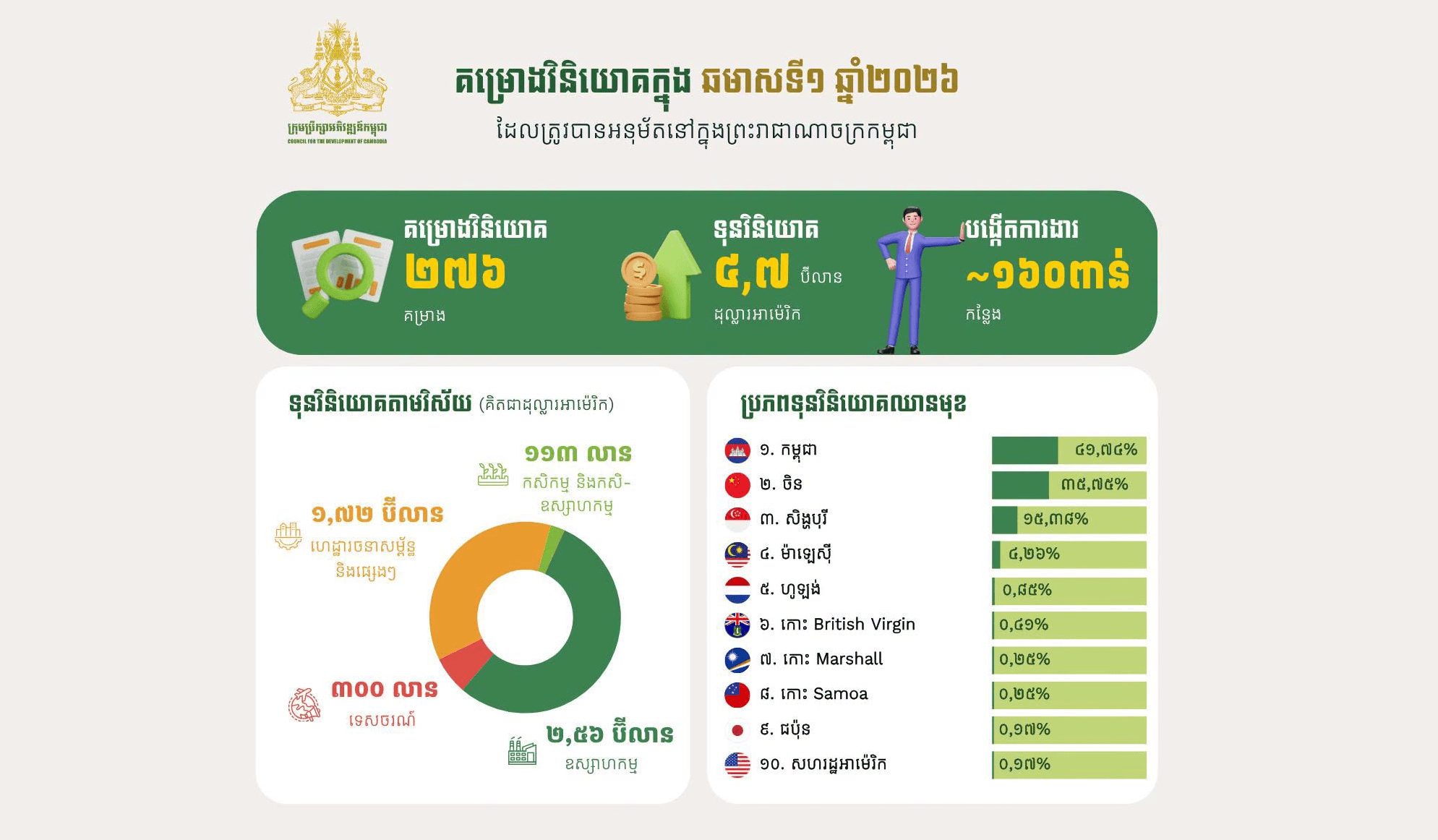
By sector, approximately USD 2.56 billion was directed toward industry, USD 1.72 billion toward infrastructure and other sectors, USD 300 million toward tourism, and USD 113 million toward agriculture and agro-processing. The dominance of industrial investment highlights Cambodia’s growing role as a regional manufacturing and supply chain platform within ASEAN, while the steady inflow of investment signals continued confidence in the country’s macroeconomic stability, strategic location, improving connectivity, and increasingly competitive investment environment.

Cambodia Coastal Provinces: The Strategic Growth Engines
Within this broader national investment momentum, Cambodia’s coastal provinces are increasingly positioning themselves as strategic growth engines under the Cambodia Coastal Master Plan framework. The provinces of Preah Sihanouk, Koh Kong, Kampot, and Kep attracted a diverse mix of industrial, tourism, infrastructure, and agro-processing projects during the first half of 2026, reflecting rising investor confidence in the southern economic corridor. Improved transport connectivity, deep-sea port access, expanding industrial zones, and proximity to regional shipping routes continue to strengthen the competitiveness of the coastal region as an integrated investment destination. The growing concentration of projects also highlights the gradual emergence of industrial clustering and logistics-driven development along Cambodia’s coastline, supporting the Royal Government of Cambodia’s long-term vision of transforming the coastal provinces into a connected comprehensive economic and industrial corridor.
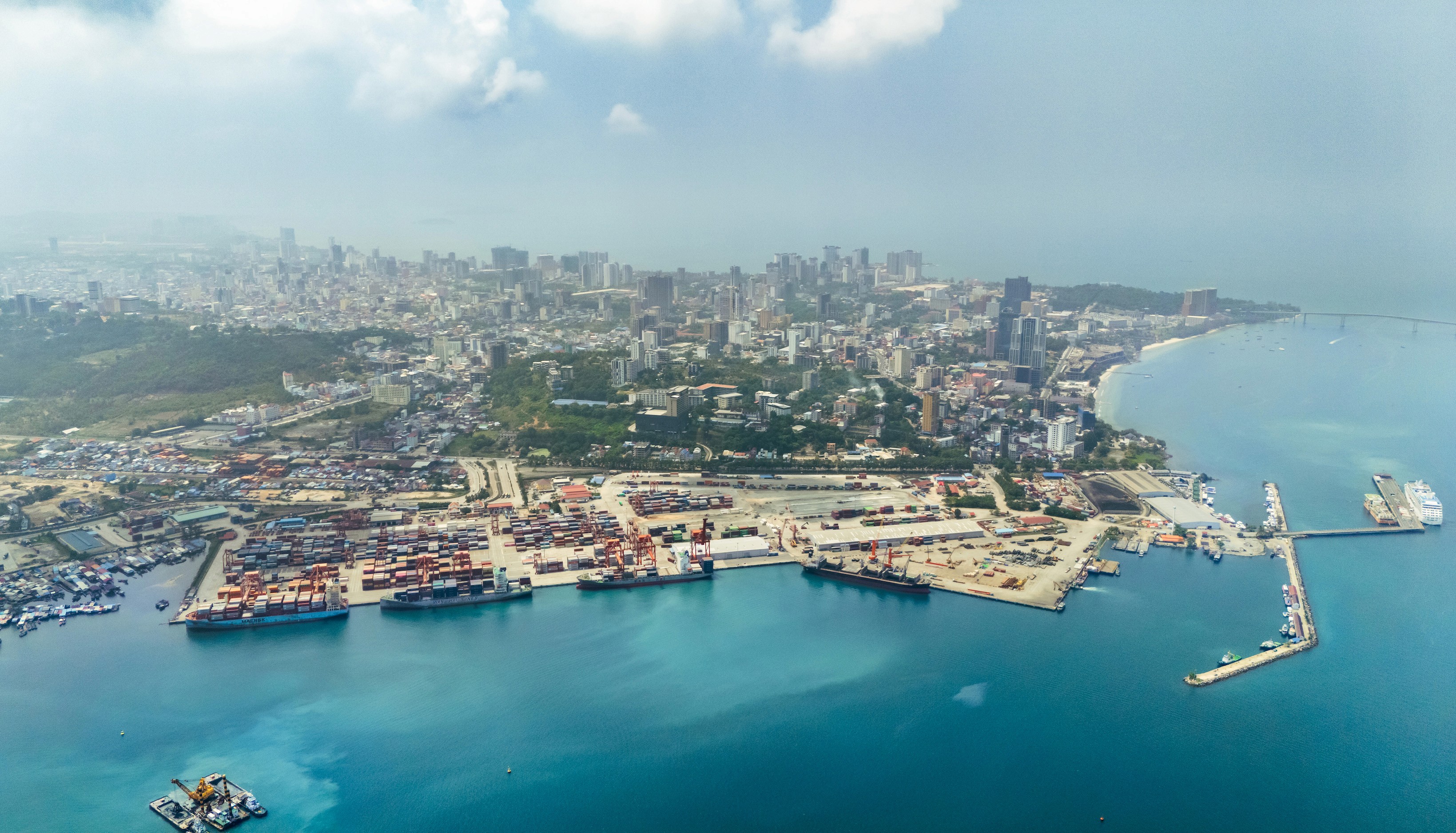
Preah Sihanouk Province remained the leading investment destination among Cambodia’s coastal provinces during the January–June 2026 period. Several large-scale industrial and infrastructure projects were approved in the province, reinforcing its position as the country’s primary industrial and logistics gateway. Among the notable approvals was an investment project to establish an electrical equipment manufacturing plant, with registered investment capital of approximately USD 21 million and the potential to create more than 3,590 jobs. The province continued to attract investment in manufacturing, assembly operations, and SEZ development, supported by the presence of the Sihanoukville Autonomous Port, expanding expressway connectivity, and improving industrial infrastructure. The concentration of projects in Preah Sihanouk reflects a broader trend of supply chain consolidation and industrial clustering, as investors increasingly seek integrated industrial ecosystems with reliable logistics, utilities, and one-stop facilitation services. These developments align closely with the Royal Government of Cambodia’s long-term strategy to position Preah Sihanouk as a modern industrial, logistics, and trade hub connected to regional and global markets.

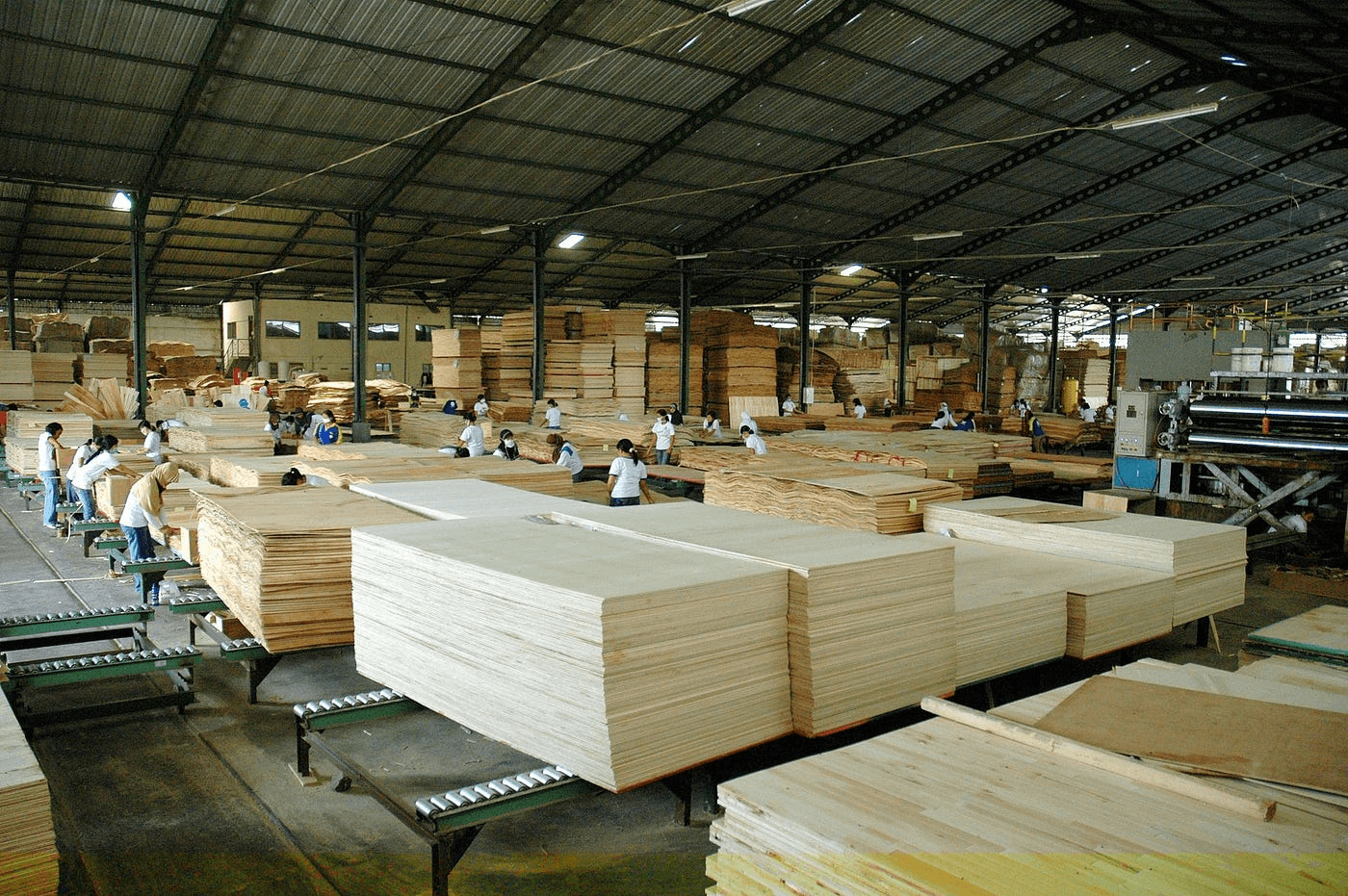
Several notable projects were also approved across Cambodia’s other coastal provinces during the first half of 2026, reflecting the region’s growing economic diversification and industrial expansion. In Koh Kong Province, the CDC approved a plywood manufacturing factory project with registered investment capital of approximately USD 4 million, which is expected to create more than 169 jobs and strengthen the province’s industrial processing capacity.
Kampot Province attracted major investment through the approval of new SEZ development projects with registered investment capital of approximately USD 120 million and the potential to create more than 237 jobs. The province also secured a cement production expansion project involving the construction of an additional manufacturing facility, with registered investment capital of approximately USD 210 million and the potential to create more than 500 jobs. These investments reinforce Kampot’s position as an emerging industrial and logistics hub along Cambodia’s southern economic corridor.

Meanwhile, Kep Province secured investment in canned fish and fish sauce manufacturing facilities, with registered investment capital of approximately USD 7 million and the potential to create more than 170 jobs. These projects are expected to support local seafood processing and promote value-added agro-industrial development. Together, these projects highlight the expanding role of the coastal provinces in supporting Cambodia’s industrial growth, logistics connectivity, and regional economic integration.

The investment approvals recorded during the first half of 2026 underscore Cambodia’s continued transition toward a more diversified and competitive economy, while reinforcing the strategic importance of the coastal region in the country’s long-term development agenda. As investment flows continue to expand across manufacturing, logistics, energy, tourism, and agro-processing, the coastal provinces are well-positioned to become key drivers of economic growth, regional integration, and industrial modernization. With coordinated infrastructure planning, effective investor facilitation, and sustainable development under the Cambodia Coastal Master Plan, the coastal corridor is emerging as one of Southeast Asia’s important economic gateways and a national economic growth pole, contributing to the achievement of the Royal Government of Cambodia’s Vision 2030 and Vision 2050.